

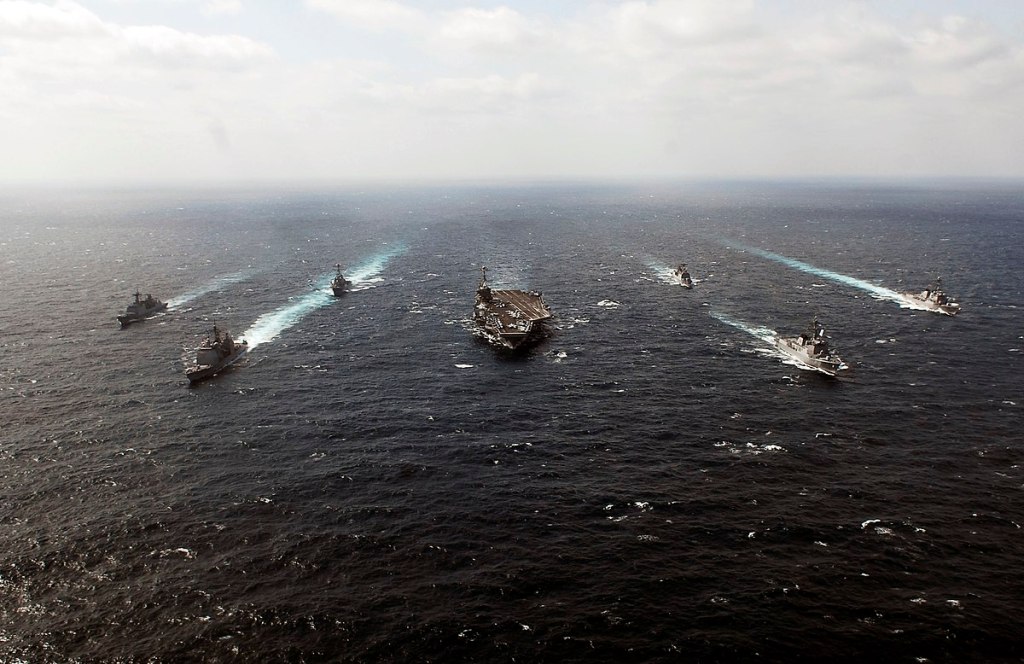
With Europe and NATO’s uncertain future under a new American regime headed by Donald Trump, the majority of the world’s eyes are fixed on the White House, morbidly curious to see which soon-to-be former US ally is next on the chopping block. Trump’s wave of tariffs on his allies and China have been the largest shakeup in American foreign policy since Pearl Harbour. No longer will the United States fund other nations to act as simultaneous buffer states and sources of external revenue. The American maritime empire that was constructed over several decades is being redrawn as we speak. Yet, whilst people are fixated on Trump’s betrayal of Europe and the upcoming crisis with Taiwan and China, few have seldom thought to address the ally most reliant on the American empire: South Korea, aka, the Hermit Nation that rides the waves of US warships.
_and_naval_vessels_from_the_Republic_of_Korea_transit_in_formation_the_end_of_Exercise_Foal_Eagle_2009.jpg)
With a neighbour hellbent on the destruction of liberal democracy to its north, the world’s second most powerful country to its west, and a historical enemy to its east, South Korea is trapped on a mountainous peninsula with few natural resources. To the south of the nation is the open sea, the only realistic conduit South Korea has to the outside world. Through this strait located between Japan and China, South Korea exports their manufactured goods such as cars, smartphones, and boybands. Although no trade route to the outside world exists through North Korea, Japan and China exist as happy importers of Korean goods. However, they only represent 25% of South Korea’s export partners. The rest exist beyond the East China Sea. Reliant on imported natural resources to produce their goods, the East China Sea is possibly more valuable than any chaebol that exists.
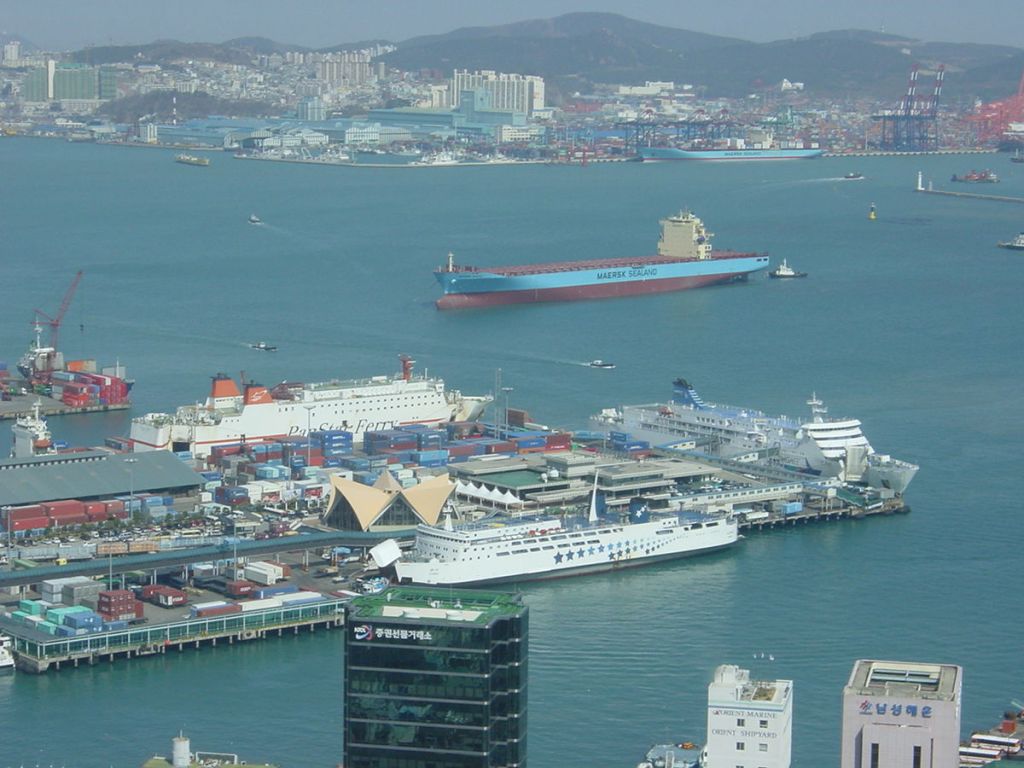

Chaebols are colossal family-run conglomerates that dominate South Korean society. Their economic size means they have intruded on virtually every aspect of Korean life. Everything from phones and fridges to warships and cannons. From candy and curry powder to electricity and chemical production; South Korean chaebols account for more than half of South Korean exports with the four largest chaebols (Samsung, Hyundai, LG, and SK) representing 40% of South Korea’s GDP. Originally promoted in the 1960s to propel South Korea into a globalised and industrialised world, chaebols maintain a strong relationship with the government. In exchange for loans and favourable legislation, the Korean government receives millions from worldwide exports. This financial power has seen the small nation wield considerable influence, creating valuable ties with numerous nations — such as the United Arab Emirates — eager to learn from South Korea’s explosive rise. With an economy fuelled by exports, South Korea is reliant on trade routes via the East China Sea. Armed and guarded by the United States Navy from China, South Korea’s giant trade vessels have been safely passing to destinations like the Middle-East, Africa, Europe, and beyond. Cut this waterway and South Korea cannot survive.
What prevents South Korea from being squeezed by their neighbours is the United States military. American troops have maintained a permanent presence in South Korea since 1957 with around 28,000 sailors, airmen, marines, and soldiers primed to defend South Korea in the event North Korea or China attempt to unite the peninsula. Historically, the United States has maintained a steadfast approach to defending South Korea. Stemming from the Korean War, American policy in Korea has been about securing the DMZ and containing North Korean aggression against South Korea and Japan. However, this seventy-year alliance will be tested under Trump. Trump’s foreign policy so far has been cut-throat: nobody is exempt, especially a nation which recently underwent a bizarre failed coup and is the source of millions of US dollars on a large military presence. If Trump’s approach to Europe is something to be based on, South Korea simply has no purpose for the United States and is eligible for a Trump-style divorce. Although a significant trade partner with America, Korea’s neighbour, Japan, is America’s economic and military partner of choice. Not only is it strategically easier to defend, Japan is also more economically influential. If Trump was to pull troops out of South Korea — which he already threatened to do during his first tenure — nothing would stop North Korea from transforming their threats into actions.
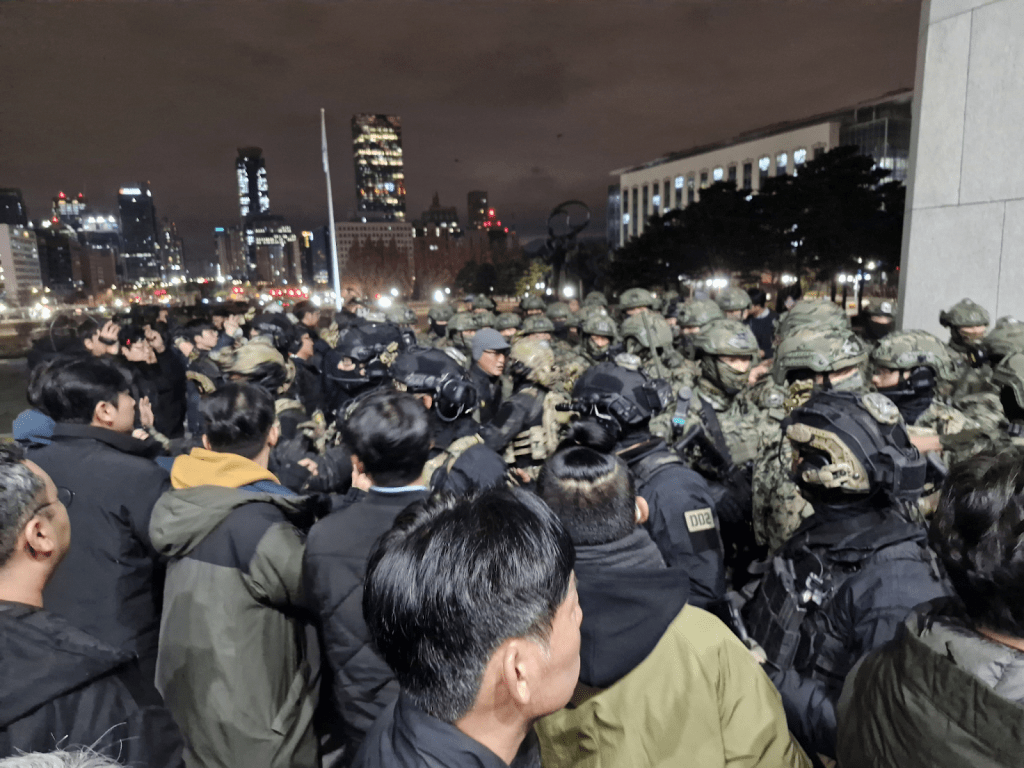

Most significantly, the departure of American troops would also see a reduced American naval presence around the Korean peninsula. Of course, some US naval presence will be required to keep North Korea and China in check, as well as defend Japan’s north-western frontiers. But that vital southern strait — South Korea’s lifeline — suddenly becomes vulnerable. With China looking poised to retake Taiwan, realistically, what would stop them from cutting South Korea off and pressuring them to show fealty to Beijing? North Korea, although unpredictable, is preoccupied with respecting their alliance with Putin — short-term military threats remain unlikely, for now. But with the Ukraine War looking to wrap up soon under a forced peace by Trump, what stops North Korea from redirecting their attention to the nation beyond the DMZ? Japan, expected to experience a demographic collapse, is of no threat. An uneasy alliance exists between South Korea and Japan because of a joint American military presence in the two nations. Due to their colonial past, South Korean opinion of Japan still remains proportionately low, despite a recent increase in positive regard. Japan’s demographic decline has been happening for the past 15 years — South Korea’s only began to hit new lows in 2024. Japan will hit their demographic collapse before South Korea’s and thus, theoretically recover before South Korea. Although South Korea’s birthrates have finally risen, there is no guarantee that this will aid in their still-declining population. By the time Japan has recovered, it will have the ability to assert itself once again. With American presence absent from South Korea, Tokyo will have greater motivation to exert its influence over the peninsula, creating a buffer between itself and North Korea/China. Caught between the spheres of influence of Beijing and Tokyo, Korea’s political position will echo that of the late 19th Century, when China, Japan, and Russia brutally and relentlessly fought over the peninsula, with Koreans crushed in the middle.
-Night_attack_at_Jiuliancheng.jpg)
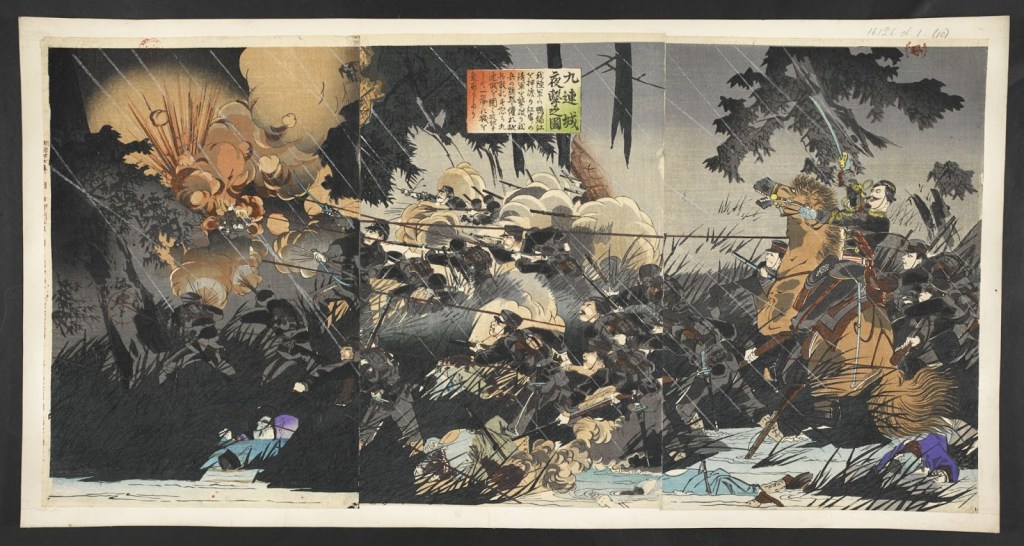
The 19th Century saw Korea forcibly opened by European, Japanese, and American imperialists. An era of internal fighting eventually saw Korean politics slowly becoming influenced by Tokyo with the long-term goal of annexation. Centuries of Korean isolation and neutrality under the protection of China, slowly unravelled. Finally, Korean civil conflict gave Japan the opportunity to pounce. Whilst China came to defend Korea to keep their sphere of influence over the peninsula, the First Sino-Japanese War ended with a decisive Japanese victory. Japan’s humiliation of Russia during the Russo-Japanese War simply solidified their grip over Korea. Without any agency, Korea was wiped off the map, ushering an era of genocide and suffering.
So what is the likelihood that Trump will withdraw American troops from South Korea? Truthfully, only Trump knows. His brutal foreign policy and potential to meet Kim Jong-Un again would suggest that withdrawal is, at a minimum, a ‘trump card’ to be used against South Korea in the event of a future disagreement. However, if the opinions of the American people were to be considered, withdrawal seems unlikely. A study by the Chicago Council on Global Affairs in October 2024 showed that most American citizens from the entire political spectrum supported the presence of American troops in South Korea. 69% of Americans said that the alliance between the United States and South Korea strengthens American national security, with an additional 63% of Americans supporting a long-term US military presence in South Korea. 51% of Americans believed that withdrawing troops would negatively impact the national security of the United States. If citizen opinion was what determined American foreign policy, then South Korea would have virtually nothing to fear. However, this study was done before Trump took power. Much has changed since October 2024, with President Trump’s ‘dog-eat-dog’ stance on his allies shaking up what were once believed to be stable relationships.
It is therefore no surprise why many Koreans are anxious over Trump’s verdict. Deputy Minister Park Jong-Won, the first major Korean delegation to visit America since Trump resumed office, has talked with American officials about the future of Korean-American trade. Park pleaded South Korea’s case for exemption from American tariffs, with acting president Choi Sang-Mok there to back him. But the uncertainty felt in Seoul extends beyond the economic consequences. The White House’s threat of tariffs may only be symbolic: a way for Trump to stamp his authority. But the implications are clear: South Korea and America’s generational alliance can come to an end with the snap of a finger. Waiting with anticipation are China and North Korea, eager to finally unite the peninsula and bring security to China’s north-east. With the United States no longer maintaining the trilateral relationship, decades of tension between Korea and Japan, due to military and trade disputes, has the potential to develop into an existential crisis for South Korea. South Korea does have one chip up its sleeve: their erratic communist brother in the north. The strong American presence means that North Korea’s missile tests and threats of forced unification are kept merely as delusions of grandeur in Kim Jong-Un’s mind. Furthermore, after years of silence from President Biden, Kim has cosied up to Vladimir Putin, culminating with the deployment of North Korean soldiers to Ukraine. The Kim Jong-Un in the present will be very different to the version that Donald Trump met in 2019. As long as North Korean nuclear weapons exist, South Korea must stand fast in order for West Coast Americans to sleep soundly. In a strange way, it is North Korea’s military zeal that would keep American troops in South Korea. Paradoxically, it is this militarism that presents itself as an existential threat to South Korea. Despite all of this, Trump’s foreign policy so far suggests that South Korea could be next to be assessed for their usefulness. If Trump plans on meeting Kim Jong-Un again to cool US-North Korea tensions, then South Korea’s utility for America may decline.
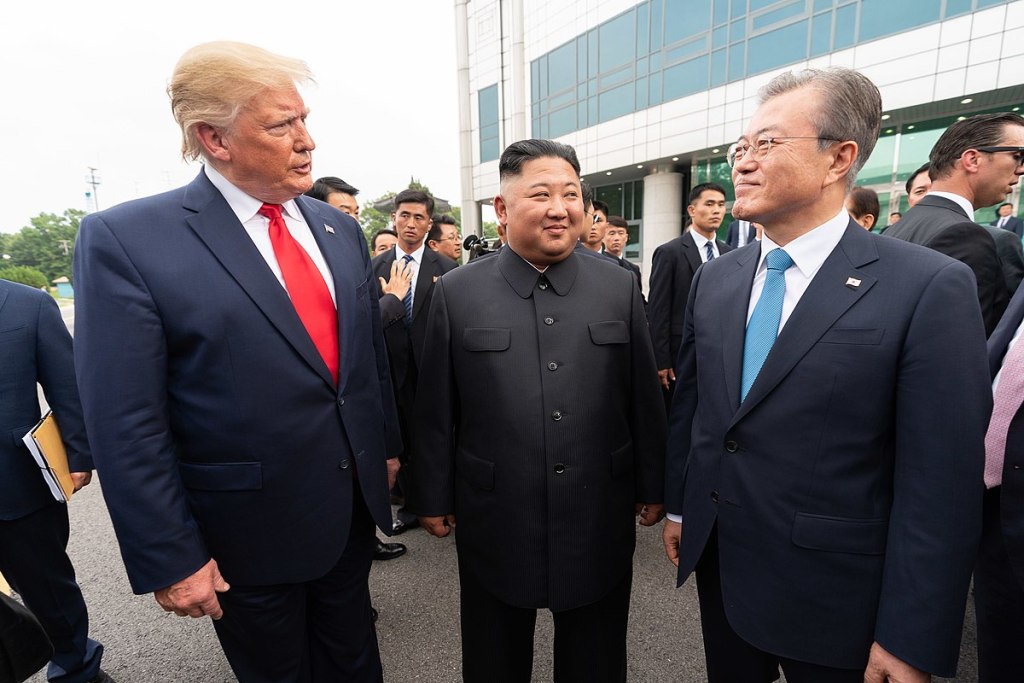
At a time when South Korea is at its lowest, they face possibly their biggest crisis yet. Much like Europe, Seoul waits nervously for the verdict. What lies ahead is uncertain. Continued defiance against the totalitarian North? The retaining of South Korea’s economic and diplomatic power? Decline and absorption by another sphere of power? The subjugation of the Korean people? South Korea’s era of colonial suffering ended decades ago, but the ghost of history lingers over the shoulder of many. Once again, Korea’s agency has been stripped from its own people and granted to an external force. Only Trump will know what comes next for South Korea; only Trump can decide South Korea’s destiny.
By Charles Hyun Gon Kim
Cover Image: The White House
.jpg)